
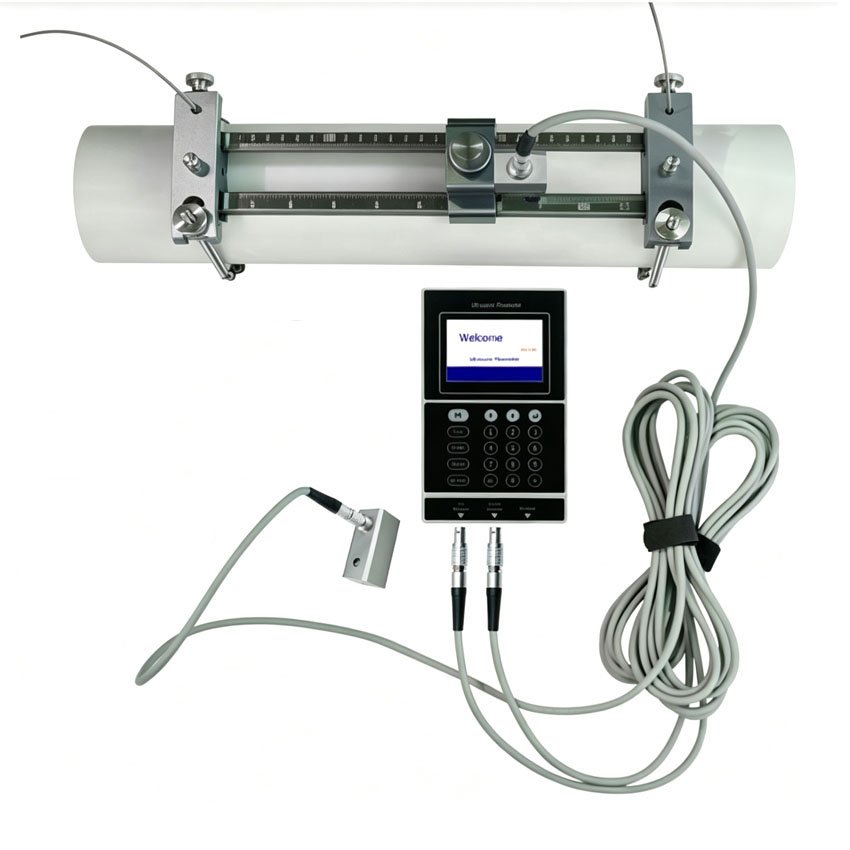
When a project needs liquid flow measurement, buyers usually compare two very different approaches: a traditional inline (wetted) meter — magnetic, turbine, vortex or positive displacement — versus a clamp-on ultrasonic meter that measures from outside the pipe. Both can be accurate. The right choice depends on installation conditions, the liquid and total cost of ownership.
Inline Meters: Accurate, but the Pipe Must Be Opened
Inline meters sit in the flow path, so the liquid physically contacts the sensing elements. They are a mature technology and handle specific duties well (e.g. custody-transfer turbine meters, magnetic meters for conductive liquids). The trade-offs:
- The pipe must be cut and the meter flanged or threaded in — usually requiring process shutdown, lifting equipment and gaskets.
- They introduce a small pressure drop and a wetted part that can wear, foul or corrode.
- Sizing is fixed: a DN500 magnetic meter is heavy and expensive, and changing pipe size means changing the meter.
Clamp-On Ultrasonic Meters: Measurement Without Contact
A clamp-on transit-time meter straps two transducers to the outside of the existing pipe. Nothing touches the liquid:
- Installed in minutes, on a live line — no cutting, welding, shutdown or leak points.
- No pressure loss, no wear, no blockage — nothing to maintain inside the pipe.
- One meter spans a wide pipe range (e.g. DN25–DN2000 on the YF-C6, up to DN5000 on the YF-C8) and works on steel, stainless, PVC, copper and lined pipes.
- Portable models like the YF-P1 turn one instrument into a whole fleet of measurement points for surveys, pump tests and energy audits.
Side-by-Side Comparison
| Criteria | Inline meter | Clamp-on ultrasonic |
|---|---|---|
| Installation | Cut pipe, shutdown, flanges | Strap on outside, minutes, no shutdown |
| Pressure loss | Small but present | Zero |
| Maintenance | Wetted parts can foul/wear | Nothing in contact with liquid |
| Liquids | Depends on technology | Clean, single-phase liquids |
| Pipe range | Fixed per body size | Wide range per instrument |
| Total cost | Meter + fitting + downtime | Meter only (plus 30’ of technician time) |
So Which Should You Choose?
Choose inline when the liquid is heavily contaminated or aerated, when the pipe does not run full, or when a custody-transfer certified wetted meter is contractually required.
Choose clamp-on for retrofit and occupied plants, temporary or seasonal measurement, large-diameter pipes where inline bodies get expensive, aggressive chemicals, and any project where downtime is not an option. For most water-based applications — the majority of industrial and building services — a clamp-on ultrasonic meter delivers the data at a fraction of the installed cost.
Frequently Asked Questions
Is a clamp-on meter as accurate as an inline meter?
For clean, full pipes, modern clamp-on transit-time meters achieve ±0.5–1.0% of reading, similar to inline magnetic meters. The key is correct mounting location and surface preparation.
Can I move a clamp-on meter between pipes?
Yes — especially portable models. Re-enter the pipe material, diameter and wall thickness and the instrument recalculates transducer spacing; compact fixed models can also be relocated between projects.
Do clamp-on meters work on plastic pipes?
Yes. PVC, HDPE, copper, carbon and stainless steel, and lined pipes are all measurable — the meter uses the pipe wall and liquid sound speeds you enter during setup.
Related Reading
- What Is a Clamp-On Ultrasonic Flow Meter?
- Installing a Clamp-On Meter Without Shutdown
- Portable vs Fixed Ultrasonic Meters
- Choosing a Flow Meter by Application
- Clamp-On Meters in Water & Wastewater
Need Help Selecting a Flow Meter?
YS-Flux manufactures clamp-on ultrasonic flow meters for wholesale, export and OEM/private-label partners. Tell us your pipe size, liquid and application — our engineers will recommend the right model and quote within one business day. Request a Quote →
Browse our complete range on the Products page.