
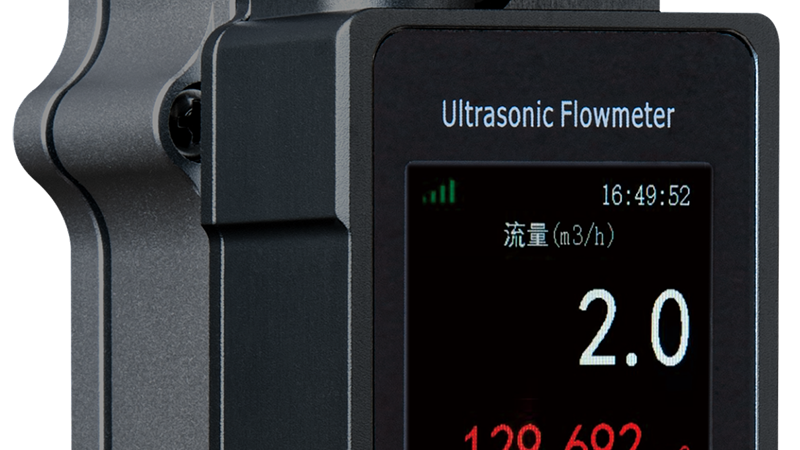
Ultrasonic flow meters look similar in photos but differ where it counts. Before requesting a quote, work through these seven factors — they map directly to the questions our engineers will ask you.
1. Pipe Size and Material
Measure the pipe outer diameter and wall thickness, and note the material (carbon steel, stainless, PVC, copper, lined). Very small lines (OD 9–115 mm) suit compact models like the YF-C3; medium pipes fit most clamp-on meters; large transmission mains up to DN5000 need the wide-range YF-C8.
2. The Liquid
Transit-time meters need clean, single-phase liquid: water, seawater, chemicals, solvents. A few percent of suspended solids or bubbles is fine; slurries are not. Also consider whether the pipe always runs full — partially filled pipes mislead any velocity-based meter.
3. Liquid Temperature
Standard transducers handle 0–80 °C media. Hot water, thermal oil or steam-condensate lines above that need high-temperature transducers (up to 150 °C, available on the YF-C8). State the real operating temperature, not just the design maximum.
4. Required Accuracy
General process monitoring: ±1.0% of reading (e.g. YF-C6) is usually plenty. Custody-style accountability, plant balancing or billing-adjacent duties justify premium ±0.5% units (YF-C8). Energy (BTU) metering has its own class — see the YF-E6 energy meter.
5. Outputs and System Integration
Decide what the meter must talk to: a local display only, a PLC/SCADA via 4–20 mA, a data logger via pulse/OCT, or a BMS via RS485 Modbus RTU. Remote sites can add GPRS cloud reporting. Matching outputs up front avoids adapter boxes later.
6. Fixed Installation or Portable Use
One permanent point → fixed wall-mount meter. Many points, surveys, commissioning or pump testing → a battery portable meter (YF-P1, 16 h runtime) or the YF-P2 with 3.5″ rotating display and DN5000 range. Some customers buy one portable unit to verify the fleet of fixed ones.
7. Environment and Budget
Outdoor or washdown areas call for IP54+ transmitters and IP68 transducers; high vibration favours solid die-cast housings. Finally, balance meter price against installation cost — a clamp-on unit often wins the total cost comparison because no pipe cutting or shutdown is needed.
Ready-Made Answers
- Small pipes, tight spaces: YF-E5 compact or YF-C3
- Permanent plant monitoring DN25–DN2000: YF-C6
- Large mains, ±0.5%, GPRS remote: YF-C8
- Heat/cooling energy (BTU): YF-E6
- Field surveys and spot checks: YF-P1 / YF-P2
Frequently Asked Questions
What information should I send for a quotation?
Pipe OD and material, wall thickness or lining, liquid, temperature range, flow range, required outputs, and quantity. Our engineers reply with a recommended model and configuration within one business day.
Can one clamp-on meter cover several different pipe sizes?
Fixed installations usually get one meter per point for simplicity. Portable meters are designed exactly for this: enter new pipe parameters and they recalculate transducer spacing automatically.
Do you supply OEM or private-label?
Yes — YS-Flux provides OEM/private-label manufacturing with custom logo, packaging and manuals. See our OEM services.
Related Reading
- Choosing a Flow Meter by Application
- What Is a Clamp-On Ultrasonic Flow Meter?
- Portable vs Fixed Ultrasonic Meters
- Transit-Time vs Doppler Ultrasonic Meters
- Clamp-On Meters in HVAC & District Energy
Need Help Selecting a Flow Meter?
YS-Flux manufactures clamp-on ultrasonic flow meters for wholesale, export and OEM/private-label partners. Tell us your pipe size, liquid and application — our engineers will recommend the right model and quote within one business day. Request a Quote →