
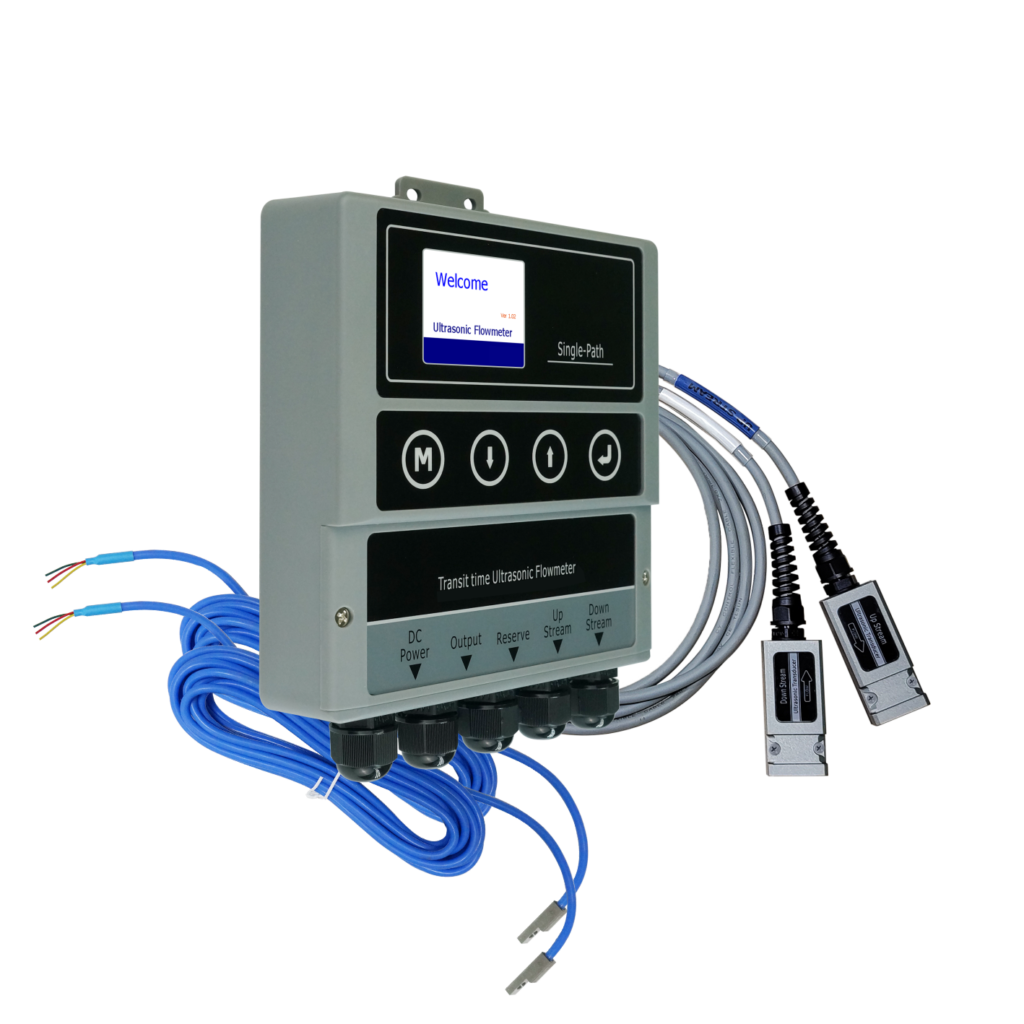
HVAC and district energy systems move enormous amounts of chilled and hot water through pipes that cannot easily be shut down — especially in occupied offices, hospitals, data centres and district networks. That combination — water-based thermal circuits plus a need for non-intrusive metering — is exactly where clamp-on ultrasonic meters shine. They measure chilled-water, hot-water and condenser-water flow from outside the pipe, and with paired temperature sensors they become full BTU/energy meters. For a general introduction see our clamp-on flow meter overview and application selection guide.
Why Clamp-On Fits HVAC and Building Services
- No shutdown in occupied buildings — transducers clamp onto live, operating chilled/hot-water lines; no draining, cutting or hot work, so tenants and operations are undisturbed (live installation).
- Ideal fluids — chilled water (5–12 °C), condenser/cooling water and low-temperature hot water are textbook transit-time applications; high-temperature hot water uses high-temperature transducers (liquid & temperature compatibility).
- Energy, not just flow — pairing flow with supply/return temperature sensors gives heating/cooling energy in kWh/BTU for billing and efficiency (how BTU energy meters work).
- BMS-friendly outputs — 4–20 mA, pulse and RS485 Modbus RTU feed flow and energy straight into the building management system (outputs & integration).
- Compact plant rooms — small-profile integrated meters fit crowded mechanical rooms and small-bore lines; no bypass or meter-run pipework needed.
Key Applications
Chilled-water flow and cooling energy
Metering flow and cooling output (kWh/RT) on chillers, air-handling units and chilled-water risers. The YF-E6 energy meter combines flow with supply/return temperature to totalise cooling energy for chiller efficiency (kW/RT), tenant billing and energy reporting — without interrupting cooling.
Hot water / heating energy
Boiler and heat-exchanger output, heating risers and domestic hot-water loops. Energy metering supports heating cost allocation and boiler efficiency; standard transducers cover typical LTHW, with high-temperature units for hotter circuits.
District cooling & heating networks
Energy transfer stations and feeder mains need accurate, non-intrusive thermal energy measurement for buy/sell billing between the energy supplier and buildings. Clamp-on energy meters install on large existing mains with no shutdown — a major advantage over inline meters that would require cutting district pipework — and Modbus/pulse outputs feed the billing/SCADA system.
Hydronic balancing & commissioning
Balancing engineers use a portable meter (YF-P1/YF-P2) to measure actual flow at each riser, branch and terminal unit, set balancing valves, and prove design flow at handover — then return for seasonal re-balancing. This is one of the most common portable uses in building services (portable meter uses).
Condenser water & cooling-tower loops
Monitoring condenser-water flow supports cooling-tower performance, pump energy and water-treatment programmes; fixed meters give continuous data to the BMS.
Tenant sub-metering & cost allocation
In multi-tenant buildings, malls and campuses, clamp-on energy meters on each tenant’s chilled/hot-water connection allocate heating and cooling costs fairly — retrofittable on existing pipework without shutdown, which inline sub-meters cannot match.
Fixed vs Portable in HVAC
Most HVAC teams end up using both (portable vs fixed):
- Fixed energy/flow meters (YF-E6, YF-C6) at chillers, boilers, energy transfer stations and billing points — permanently wired to the BMS for 24/7 monitoring and totals.
- Compact meters (YF-C3) in tight plant rooms and on small lines.
- A portable (YF-P1/YF-P2) for commissioning, balancing, troubleshooting and periodic verification — one unit serves the whole building or estate.
Typical Configuration by Point
| Measurement point | Measure | Suggested setup |
|---|---|---|
| Chiller / boiler output | Flow + energy (kWh) | YF-E6 energy meter, Modbus to BMS |
| District energy transfer station | Cooling/heating energy (billing) | YF-E6 / YF-C8 on large mains, pulse/Modbus |
| Chilled/hot-water riser monitoring | Flow (continuous) | YF-C6 fixed, 4–20mA/Modbus |
| Tenant sub-metering | Energy allocation | YF-E6 per tenant connection |
| Balancing / commissioning | Flow (temporary) | YF-P1/YF-P2 portable |
| Small plant-room lines | Flow | YF-C3 compact |
Practical Notes
- Mount on a full, straight run (≥10–15D) away from valves and air separators; entrained air is the commonest signal issue in chilled-water loops.
- For energy work, fit the paired temperature sensors on supply and return lines and confirm the meter uses the correct fluid (water/glycol mix affects both sound speed and heat capacity).
- Retrofit vs new-build: clamp-on avoids both shutdown and the cost of meter runs/bypass sections that inline meters require — see clamp-on vs inline. Datasheets and wiring/Modbus maps are on the Downloads page.
Frequently Asked Questions
Can a clamp-on meter measure chilled water for air conditioning?
Yes — chilled water (typically 5–12 °C) is one of the most common clamp-on applications. Transit-time meters measure it accurately on live pipes with no shutdown; for cooling energy in kWh/RT rather than just flow, use an energy meter like the YF-E6 with paired supply/return temperature sensors.
How do I meter heating/cooling energy for tenant billing?
Use a clamp-on energy meter (YF-E6): it measures flow with ultrasound and supply/return temperatures with paired sensors, then totals thermal energy (kWh/BTU). It installs on the tenant’s or transfer-station pipework externally — no shutdown or cutting — and outputs pulse or Modbus RTU to the billing/BMS system. This is widely used for district energy billing and tenant cost allocation.
Do I need a fixed or portable meter for HVAC balancing?
Use a portable (YF-P1/YF-P2) for commissioning and hydronic balancing — it moves between risers, branches and AHUs to measure flow while valves are adjusted, then comes off. Use fixed meters (YF-E6/YF-C6, or compact YF-C3 in tight plant rooms) at chillers, boilers, transfer stations and billing points for permanent BMS monitoring. Most building-services teams own both.
Specifying Meters for an HVAC or District Energy Project?
YS-Flux supplies energy meters (YF-E6) for BTU/kWh billing, fixed flow meters (YF-C6/YF-C8) for permanent monitoring, compact meters (YF-C3) for plant rooms and portables (YF-P1/YF-P2) for balancing and commissioning — with Modbus/pulse/4–20 mA outputs for any BMS. Send us your pipe sizes, fluid and temperature and whether you need flow or energy — our engineers will recommend the set within one business day. Request a Quote →
Browse our complete range on the Products page.
Questions about your application? Contact our team or request a quote — we respond within 24 hours.