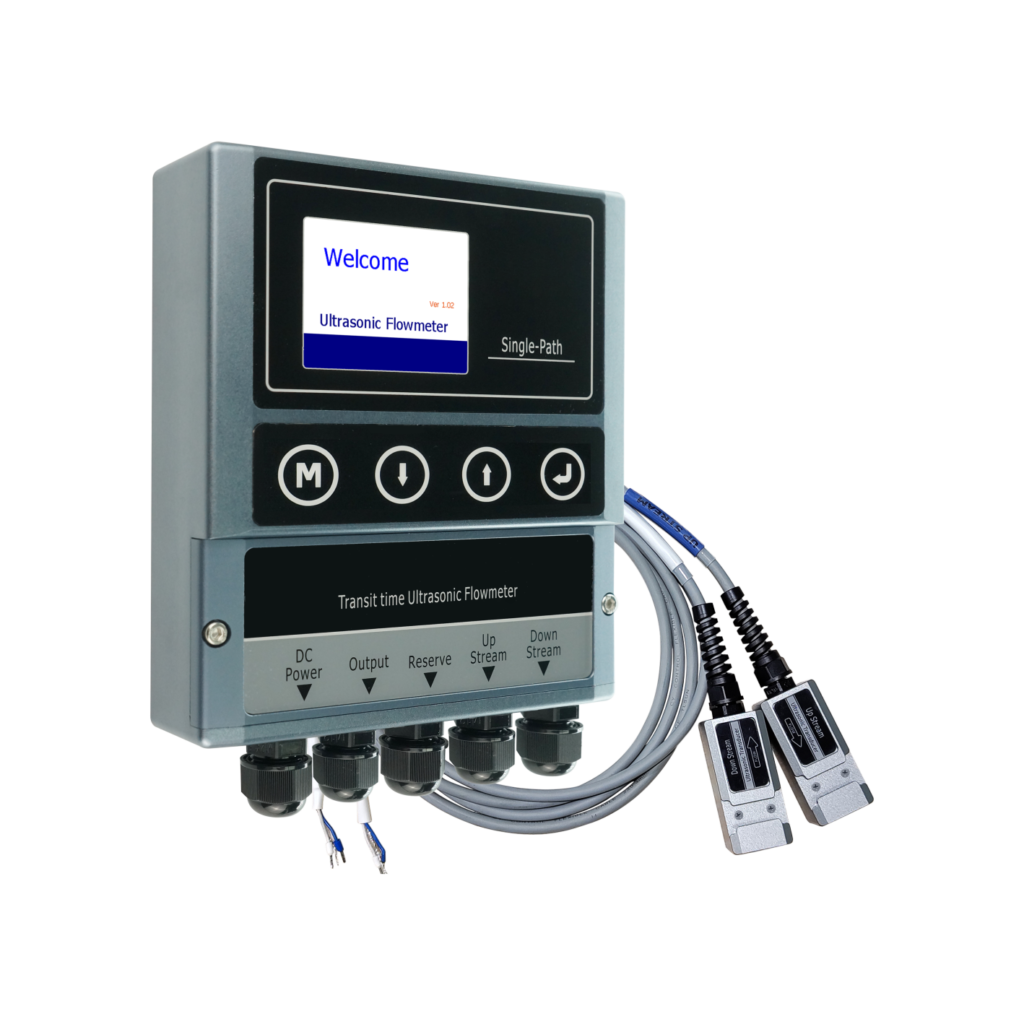
In chemical and process plants, flow measurement comes with a set of difficulties few other industries face: corrosive and aggressive fluids, high temperatures and pressures, hazardous areas, expensive pipe materials, and processes that cannot be shut down. A clamp-on ultrasonic meter addresses several of these at once, because it measures from the outside of the pipe and never touches the fluid. For a general introduction see our clamp-on flow meter overview and the application selection guide.
Why Clamp-On Fits Chemical and Process Work
- No wetted parts — chemical compatibility is automatic. The transducers sit on the pipe exterior, so acids, alkalis, solvents and demineralised water never contact a sensor element. There is no need to specify exotic alloys, PTFE liners or special seals for the meter itself — a major cost and lead-time saver versus inline meters.
- No leak path. Nothing penetrates the pipe wall, so adding a clamp-on meter introduces zero new flanges, seals or tappings that could leak hazardous fluid — an important safety and environmental consideration.
- No shutdown, no hot work. Meters mount on live, pressurised lines without cutting, welding or draining — critical in continuous process plants where a shutdown costs far more than the instrument (live installation).
- Works on the pipes plants use — stainless steel, alloy, lined steel (PTFE/rubber/glass), PVC/CPVC and HDPE (pipe materials).
- High-temperature capability — high-temperature transducers and couplant extend measurement to hot process lines (~150 °C and above on premium units).
- Demineralised / DI water — ultrasonic works on ultra-pure and deionised water where magnetic flow meters cannot (they need conductivity).
Typical Applications
Corrosive and aggressive fluids
Acids, alkalis, caustics, solvents, alcohols and salt solutions on stainless or lined pipe. Because measurement is non-contact, the fluid’s chemistry does not dictate the meter’s materials of construction — the same clamp-on unit handles a mild chemical and an aggressive one. Fluid compatibility notes are in our liquids & temperature guide.
Demineralised, deionised and ultra-pure water
Boiler feed, DI rinse water, pharmaceutical and electronics-grade water, and condensate — all measure well with ultrasound despite very low conductivity that rules out mag meters.
High-temperature process and thermal fluid lines
Hot water, thermal oil and heated process streams use high-temperature transducers; the premium YF-C8 is specified for these duties and for large or hard-to-couple process mains.
Temporary measurement, commissioning and verification
Process engineers use a portable meter (YF-P1/YF-P2) to verify installed meters during audits, troubleshoot a balance problem, commission a new line, or measure a stream that has no permanent meter — all without breaking into the pipe or a shutdown. It is the standard tool for ad-hoc process flow checks.
Mass-balance, batch and utility monitoring
Fixed clamp-on meters (YF-C6/YF-C8) on clean process and utility lines provide continuous flow and totals to the DCS/PLC via 4–20 mA, pulse or RS485 Modbus (outputs & integration), supporting mass-balance reconciliation, batch accounting and utility (water/energy) management.
Know the Limits
Transit-time clamp-on meters need a clean, single-phase, full-pipe liquid. In chemical plants the streams that don’t suit transit-time are those with high solids or entrained gas — slurries, crystallising streams, heavily aerated or two-phase fluids. Those need a Doppler ultrasonic meter (which uses reflections from particles/bubbles) or an inline magnetic/Coriolis meter. The split is explained in transit-time vs Doppler. Borderline cases are best confirmed on site with a portable meter before committing to a fixed install.
Configuration by Duty
| Duty | Fluid example | Suggested setup |
|---|---|---|
| Permanent process/utility monitoring | Clean chemicals, water, solvents | YF-C6 fixed, Modbus/4–20mA to DCS |
| Large / high-temperature / hard lines | Thermal fluid, hot process, big mains | YF-C8 premium, high-temp transducers |
| Aggressive fluids on exotic/lined pipe | Acids, caustics, DI water | Standard clamp-on (non-contact = no wetted issue) |
| Audit / verification / commissioning | Any clean process stream | YF-P1/YF-P2 portable |
| Slurries / high-solids / aerated | Crystal slurry, two-phase | Doppler or inline magnetic/Coriolis |
Installation Notes for Process Plants
- Select the correct fluid type in the meter (solvents and oils have a different sound speed from water) and use accurate pipe OD/wall thickness — lined and alloy pipes need the lining/layer data entered.
- Provide a straight run (≥10–15D) away from pumps and control valves; entrained gas from dosing or agitation is the commonest signal problem (troubleshooting).
- For hazardous areas, follow site standards for the transmitter location and use approved cabling/barriers as required; the external transducers themselves add no process penetration.
- Retrofit advantage over inline meters — no meter runs, bypasses or shutdown — is summarised in clamp-on vs inline; manuals and Modbus maps are on the Downloads page.
Frequently Asked Questions
Can a clamp-on meter measure corrosive chemicals safely?
Yes — and this is a key strength. Because the ultrasonic transducers mount on the outside of the pipe, no sensor part touches the fluid, so there are no wetted parts to corrode and no new flanges, seals or tappings that could leak. Acids, alkalis, solvents and demineralised water can all be measured without specifying exotic meter materials; the meter simply clamps onto the existing (stainless, lined or plastic) pipe.
Does a clamp-on meter work on demineralised or DI water?
Yes. Unlike magnetic flow meters, which require the liquid to be conductive, ultrasonic transit-time meters work on ultra-pure, demineralised and deionised water (boiler feed, pharmaceutical/electronics rinse water, condensate) as long as the pipe is full and the liquid is clean and single-phase.
Which chemical streams are not suitable for transit-time clamp-on?
Transit-time needs a clean, single-phase liquid. Streams with high suspended solids, crystallising material or heavy entrained gas — slurries and two-phase fluids — scatter the ultrasound and should use a Doppler ultrasonic meter (which relies on reflections from the particles/bubbles) or an inline magnetic or Coriolis meter. Clean chemicals, solvents, oils and water (including DI water) all measure well; confirm borderline streams on site with a portable meter.
Specifying Meters for a Chemical or Process Application?
YS-Flux fixed (YF-C6) and premium (YF-C8) clamp-on meters, with high-temperature transducers and Modbus/4–20 mA/pulse outputs, suit a wide range of clean process fluids and pipe materials. Send us your fluid, concentration, temperature, pipe material and size — our engineers will confirm the model, transducer set and mounting method (and advise if a Doppler-type instrument suits solids-laden streams) within one business day. Request a Quote →
Browse our complete range on the Products page.